Local Vinyl Window Replacement | Augusta Window Replacement

Vinyl window replacement on a Kennebec Valley house starts at the sill, where we run an awl into the wood and check the frame for square before we choose an insert or a full-frame unit. That choice and its price go on paper for every opening before the first old sash (the moving part of the window) comes out.

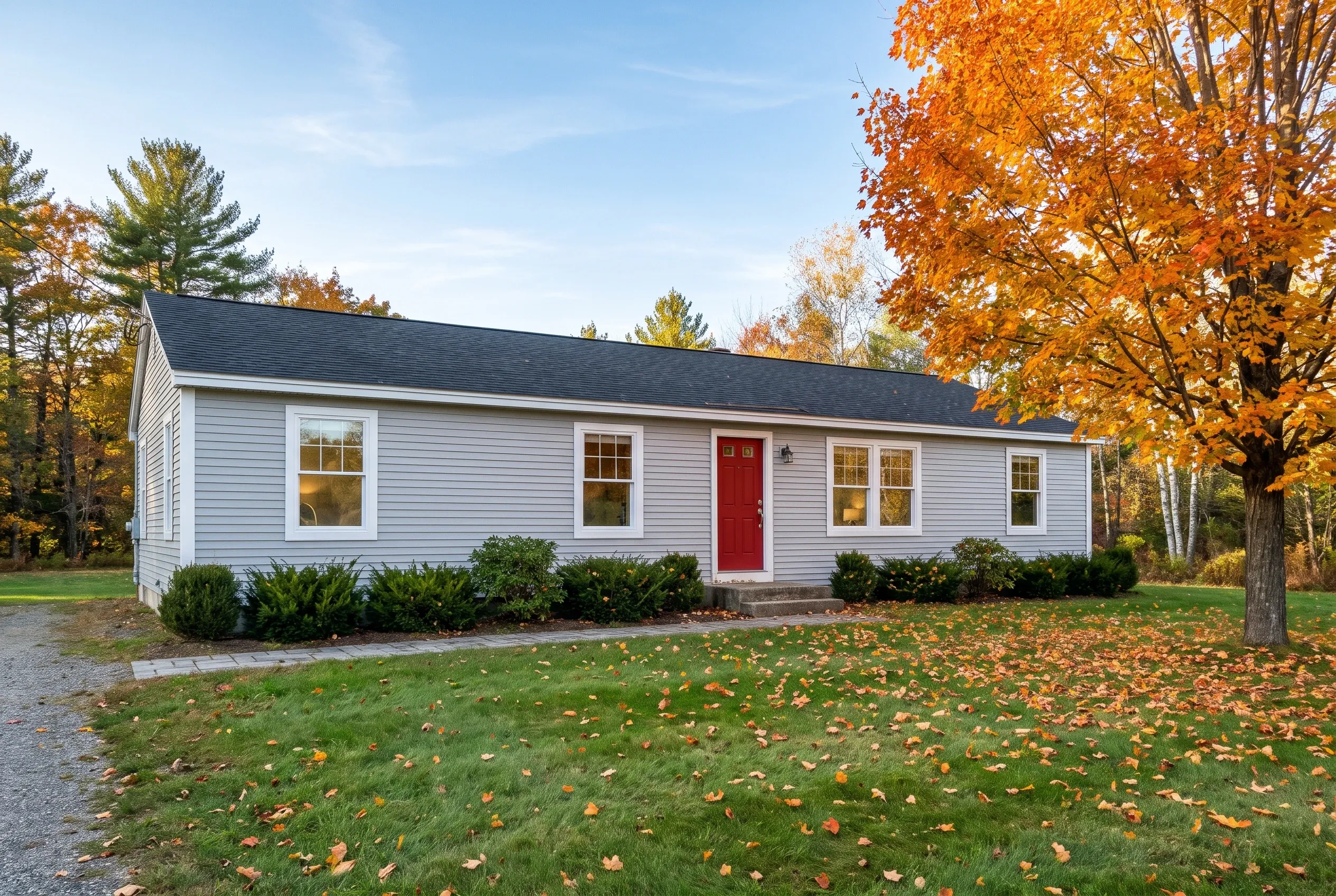
Vinyl window replacement: gray house with white trim, a red door, and five six-over-six double-hung windows in an autumn yard with orange leaves on the lawn
  • Every sill probed before a price is written
  • Full-frame wherever the frame has gone soft
  • Only one opening open at a time

This page covers vinyl window replacement across the Kennebec Valley: how an insert differs from a full-frame unit, what the label on a new window should show, and where vinyl suits an older house and where it does not.

It is written for owners of ranches, capes and later colonials who want tight glass in a January wind and a frame they never scrape. Augusta Window Replacement sets an insert only in a frame that is square and sound and gives every full-frame opening a sill pan and lapped flashing tape.

The number worth remembering: averaged over many quotes, a job of one to five windows lands at $5,000 to $15,000 and a whole house of 15 to 25 at $28,000 to $65,000, with vinyl the least costly frame material.

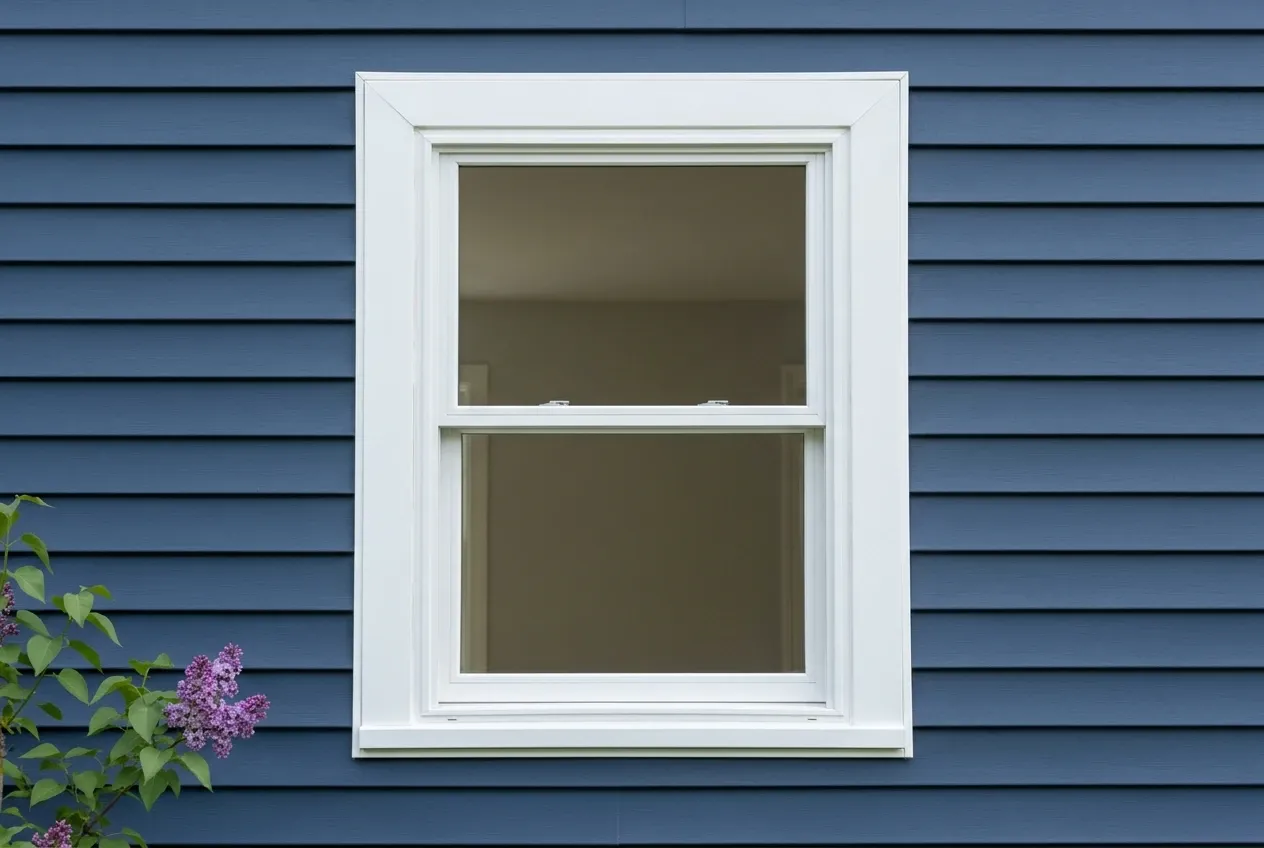
Vinyl window replacement: white-trimmed, one-over-one window on blue horizontal siding with purple lilac blossoms in the lower left corner during the spring
  • Method written beside each price
  • Rot shown to you before it is priced
  • Old units hauled away for you

Why Do Two Vinyl Window Quotes on One House Differ?

Two vinyl window quotes on one house usually differ because one prices an insert set into the old frame and the other prices a full-frame unit with a sill pan, a bigger job under the same name. We make that call window by window from what the sill and jambs show, and write it beside the price.

  • Each frame measured corner to corner for square
  • A sill pan and lapped tape on every full-frame opening
  • One opening at a time, even in January

What Should You Know Before a Vinyl Window Goes In?

Before a vinyl window goes in, three decisions matter: its fit in the old opening, its label, and its match to the house.

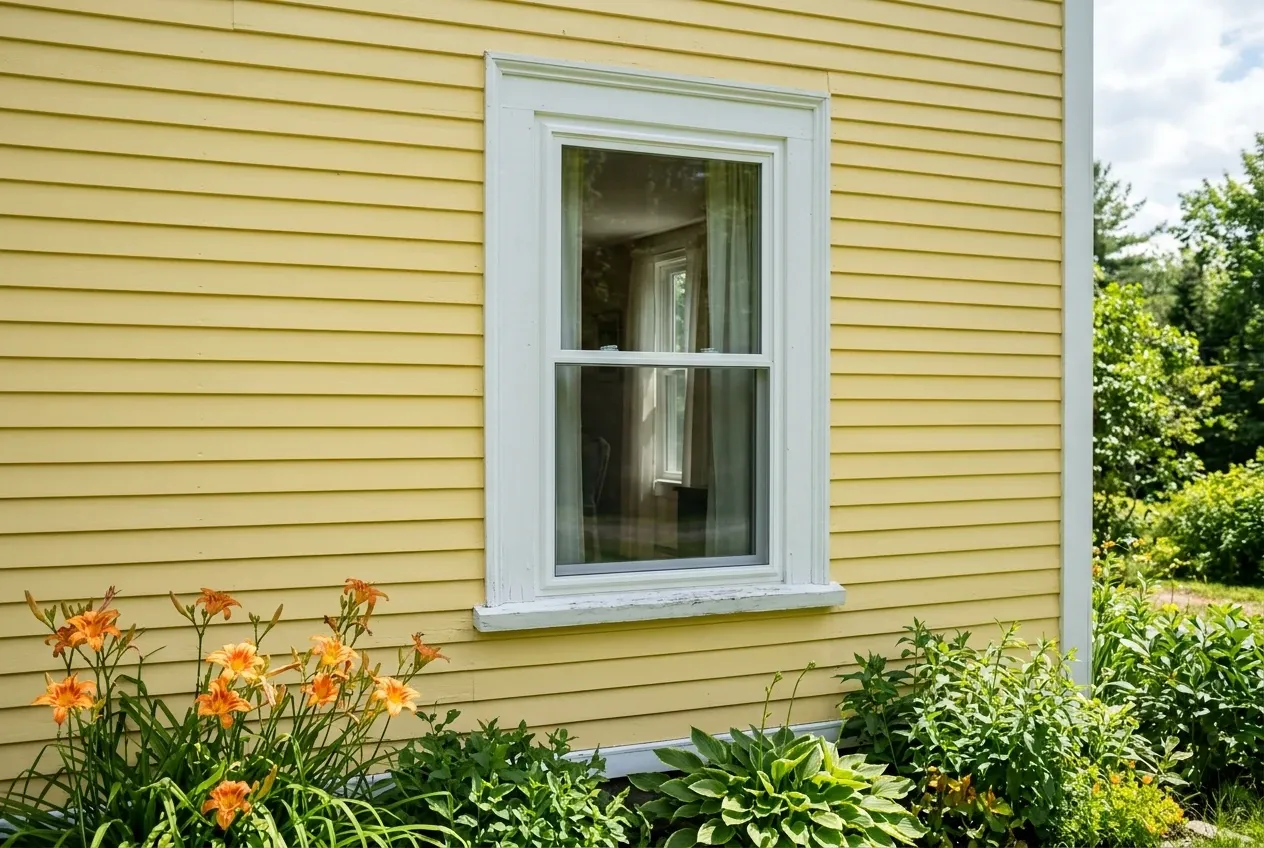
Vinyl window replacement: yellow clapboard house with a white-trimmed, one-over-one double-hung window, surrounded by blooming orange lilies and green foliage during a sunny summer day

How the Sill and Frame Pick Insert or Full-Frame

An insert, or pocket window, is a complete unit that slides into the existing frame once the old sash and balances are pulled, leaving the outside trim and inside casing in place. A full-frame unit removes the whole old window back to the rough opening, the hole the framing leaves for a window, which lets us see that framing, repair it and flash it.

Fine Homebuilding and This Old House draw the same line we do: an insert suits a frame that is square, level and sound, while a rotted or out-of-square frame needs full-frame. The Department of Energy's Building America checklist labels full-frame the recommended option and says the space behind an old window's trim was often never sealed against air.

On older capital-area houses, ice dams often leave a sill (the frame's lowest board, which takes runoff from the glass) soft under good paint, and an insert set on it only covers the rot. Where we go full-frame, a sill pan (a shaped tray under the window that drains any leak to the outside) goes in first, then flashing tape lapped into the house wrap so water on the tape always lands outside the layer beneath.
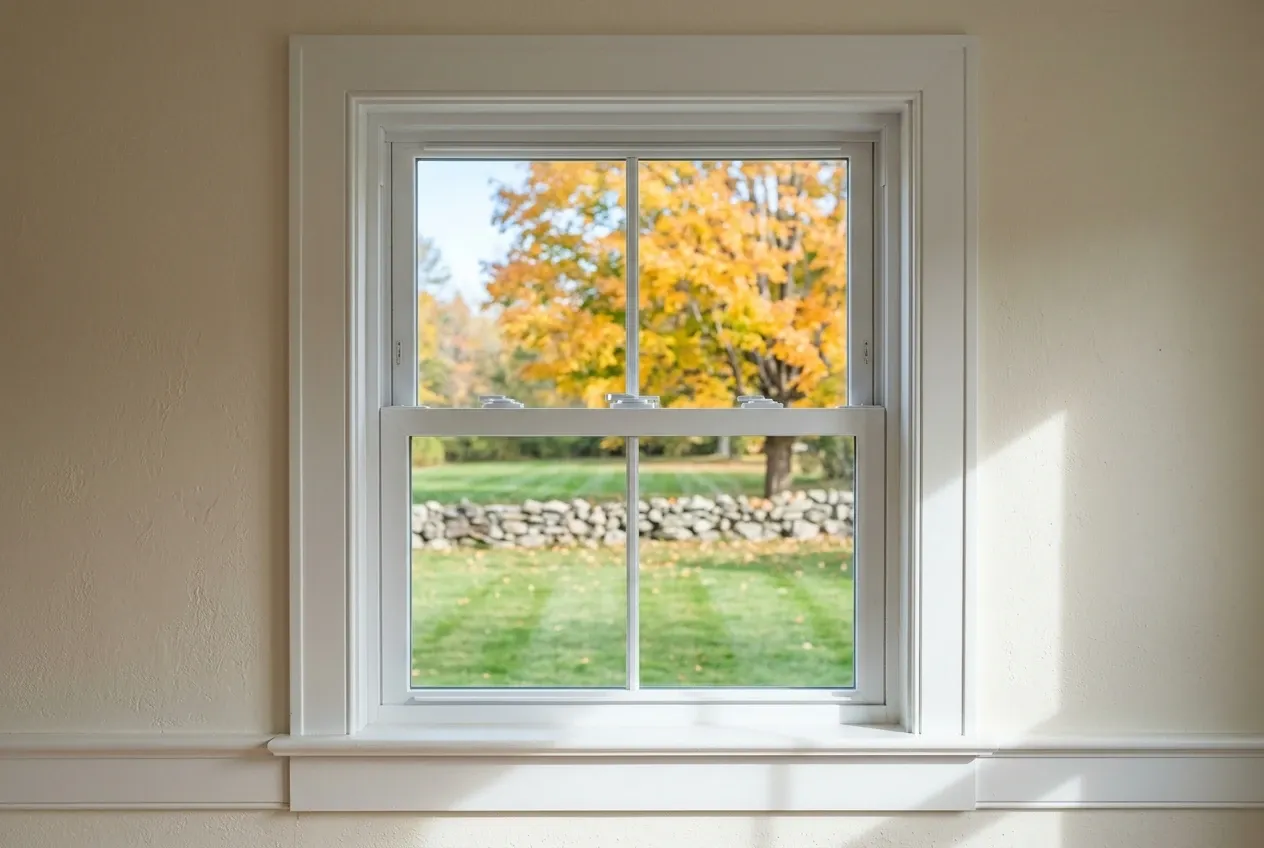
Vinyl window replacement: A white double-hung two-over-two window with white trim looks out onto a green lawn, stone wall, and yellow autumn tree

What the NFRC Label on a Vinyl Window Tells You

A rated window carries an NFRC label listing its U-factor, solar heat gain, visible light, condensation resistance and air leakage, and NFRC says the lower the U-factor, the better the window keeps heat in. If ice forms on the inside of your old glass every January, compare the condensation number too, though room humidity still plays a part.

Kennebec and Lincoln counties fall in IECC climate zone 6A, and there Maine's 2021 energy code caps a window's U-factor at 0.30. ENERGY STAR Version 7.0, which covers windows made on or after October 23, 2023, asks Northern zone windows for U-0.22 or lower with an SHGC (solar heat gain coefficient) of 0.17 or more, or an equivalent pair up to U-0.26.

Read the frame as closely as the glass: Andersen describes its 100 Series as Fibrex, a blend of wood fiber and polymer that is not vinyl, and Pella's 250 Series brochure describes multichambered frames with metal-reinforced sash. Before ordering, hold a sample against your old sash and compare the frame showing around the glass, since that strip reads from the street.

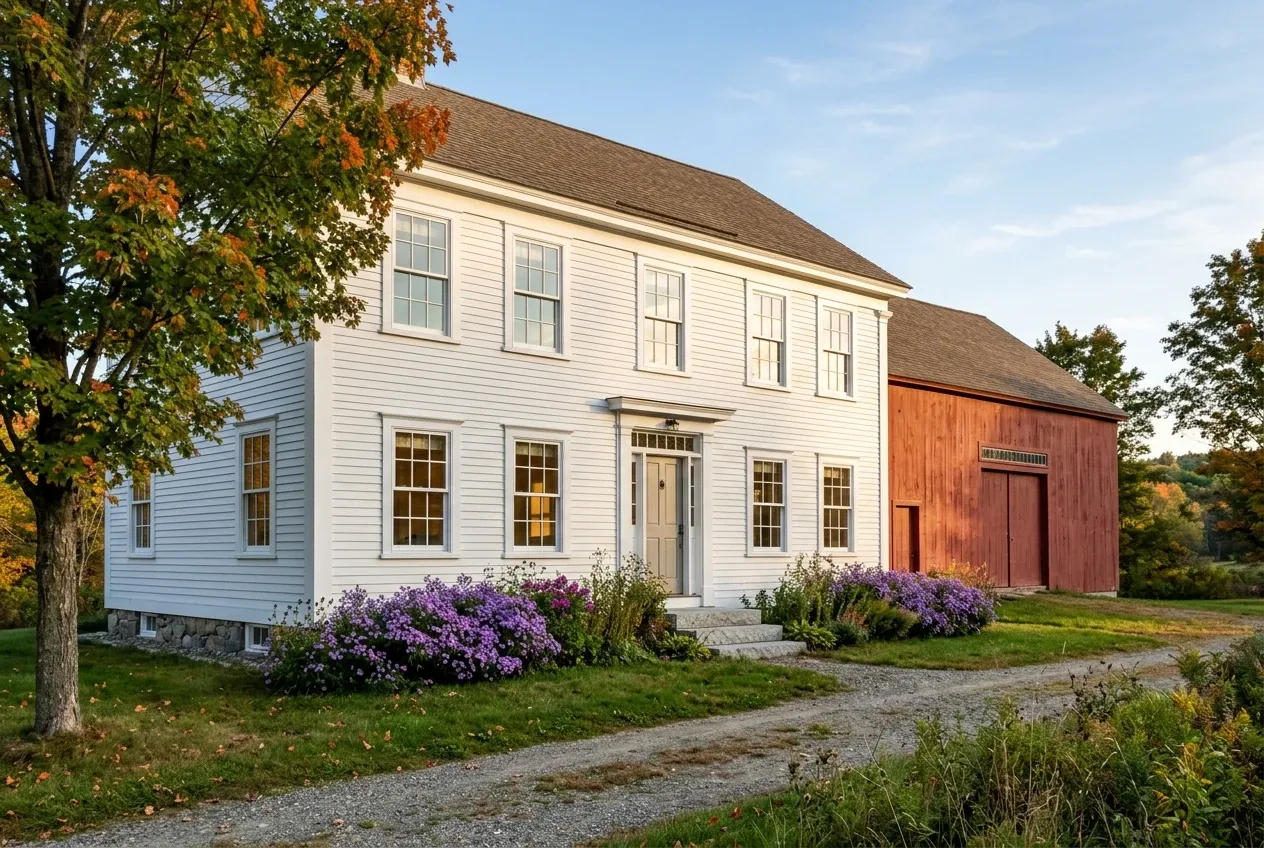
Vinyl window replacement: white house with eleven double-hung six-over-six windows and tan door with transom, next to a red barn in autumn, with white siding and trim

Vinyl on an Older House: Pane Pattern and Egress

Grilles are the bars that split the glass into "the little panes," and on a vinyl window they usually sit between the panes of the insulated glass unit, the sealed double or triple pane. We match the pattern the house was built with: six-over-six or two-over-two on a farmhouse or an older cape, one-over-one on a 1960s ranch.

A bedroom window is also an escape opening, and Maine requires 5.7 square feet clear on every floor because the state deleted the smaller grade-floor exception. The Maine-adopted IEBC 505.3 lets a replacement skip that size when it is the largest standard unit the maker offers for the existing frame, in the same operating style or one that opens as wide or wider.

What Vinyl Window Services Do We Offer?

Each vinyl job takes in the frame, the flashing and the trim, never the glass alone.

  • A sill, jamb and header check before any price
  • Insert or full-frame vinyl, sealed with low-expansion foam
  • Trim, capping and a final test of every sash

A pre-1978 home falls under EPA's lead renovation rule the moment paid work disturbs its paint, and EPA says window replacement is always covered, whatever its size. Ask to see any installer's EPA firm certification, and make sure the Renovate Right pamphlet reaches you before a single window is touched.

How to Plan a Vinyl Window Job With Us

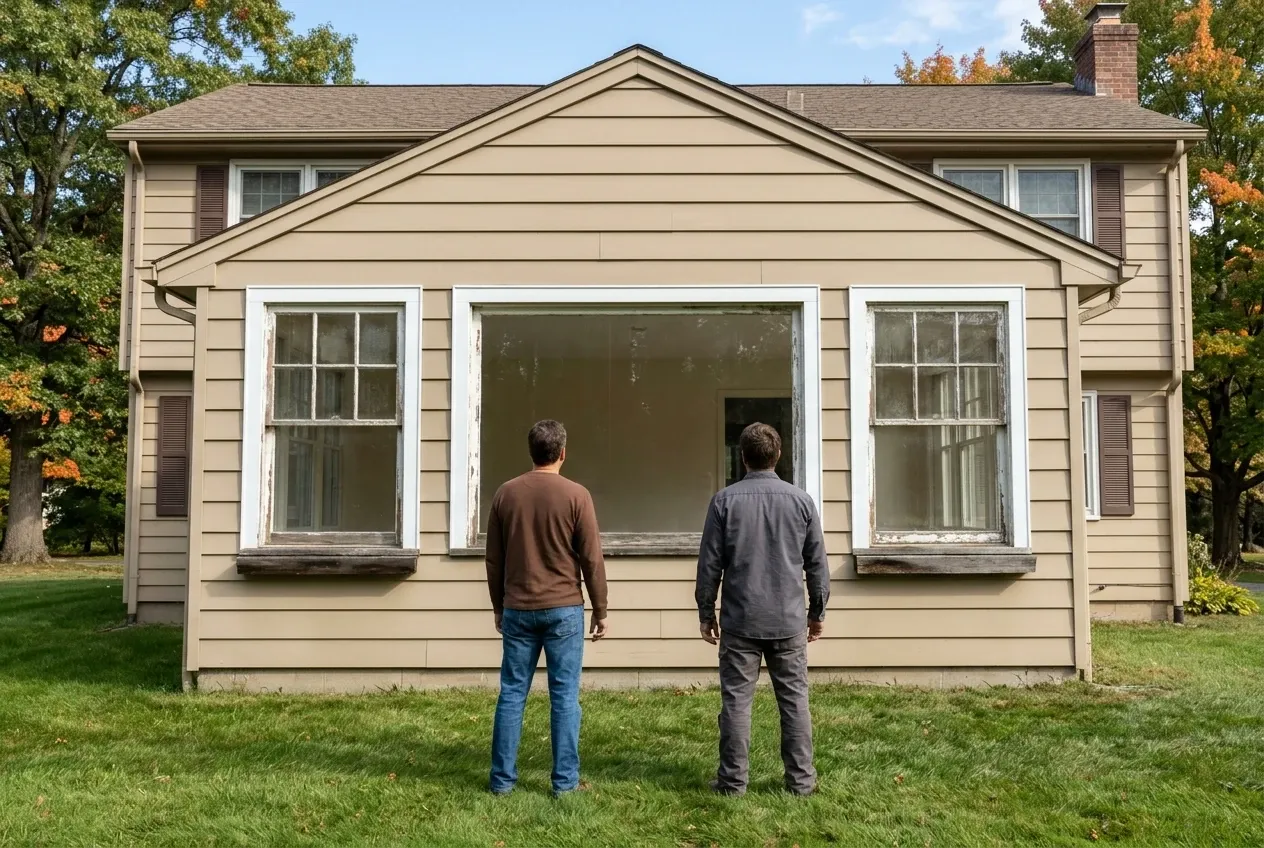
  1. Vinyl window replacement first visit: two men stand on grass facing a tan house with white trim, six-over-six windows, and an empty central window frame during autumn

    Step 1: We measure and inspect every opening.

    We measure each window three ways, run a tape across both diagonals, probe the sill and header, and flag each bedroom window that has to meet the egress rule.

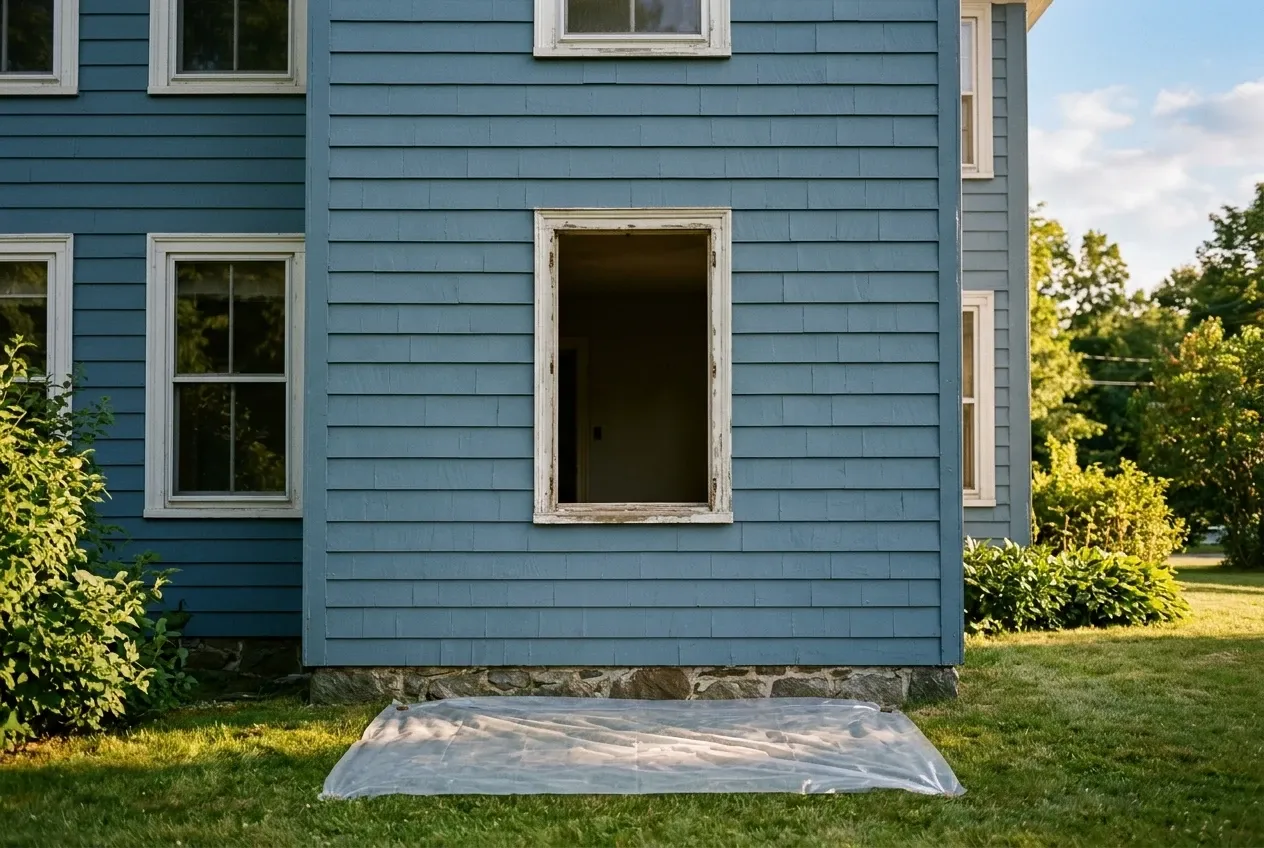
  2. Vinyl window replacement in progress: blue shingle house with white trim and six-over-six windows has an empty frame with sashes removed above a plastic tarp on summer grass

    Step 2: A written price, then a contract we both sign.

    The written price gives every opening its own line, insert or full-frame, and past $3,000, 10 MRSA ยง1487 requires the job to be written up as a contract both sides sign, and at most a third of the price is paid at the start. Rot found once an old window is out is shown to you, then priced on a change order you sign before the next step.

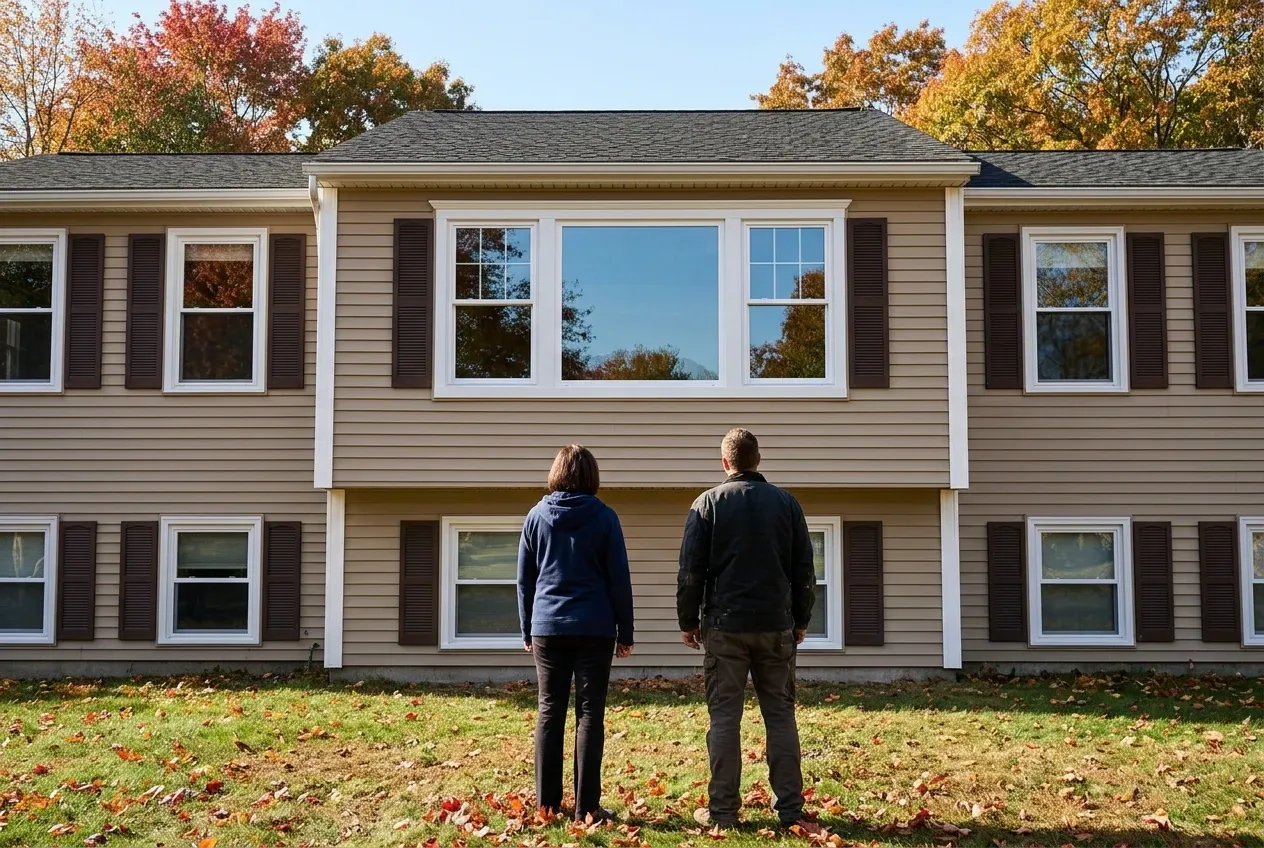
  3. Vinyl window replacement final walkthrough: two people view a tan house with white trim in autumn, featuring nine windows including six-over-six and one-over-one double-hung panes

    Step 3: Each opening closed before the next, then a walkthrough.

    Each new unit is shimmed level and sealed with low-expansion window foam, which blocks drafts but leaves water to the pan and the tape, and we close that wall before opening another. We haul the old units away, then go room by room with you, trying each sash.

Which Houses Are Right for Vinyl Window Replacement?

Vinyl window replacement is the right buy for most of the capital area's ranches, capes, split-levels and colonials from the 1970s to the 1990s, where plain double-hungs belong and the lowest-cost frame makes sense.

It is the wrong buy on the street face of a Greek Revival, Federal or Italianate house whose old wood sash and thin bars set its look from the sidewalk. There, wood-clad sash built to the original pane pattern earns the higher price, and our wood window replacement page shows how.

Vinyl is also a weak choice for a very wide opening: Fine Homebuilding's Martin Holladay wrote that large vinyl windows need steel or aluminum reinforcement, that cold makes vinyl brittle, and that fiberglass usually outperforms it. On a wide opening we price fiberglass beside vinyl.

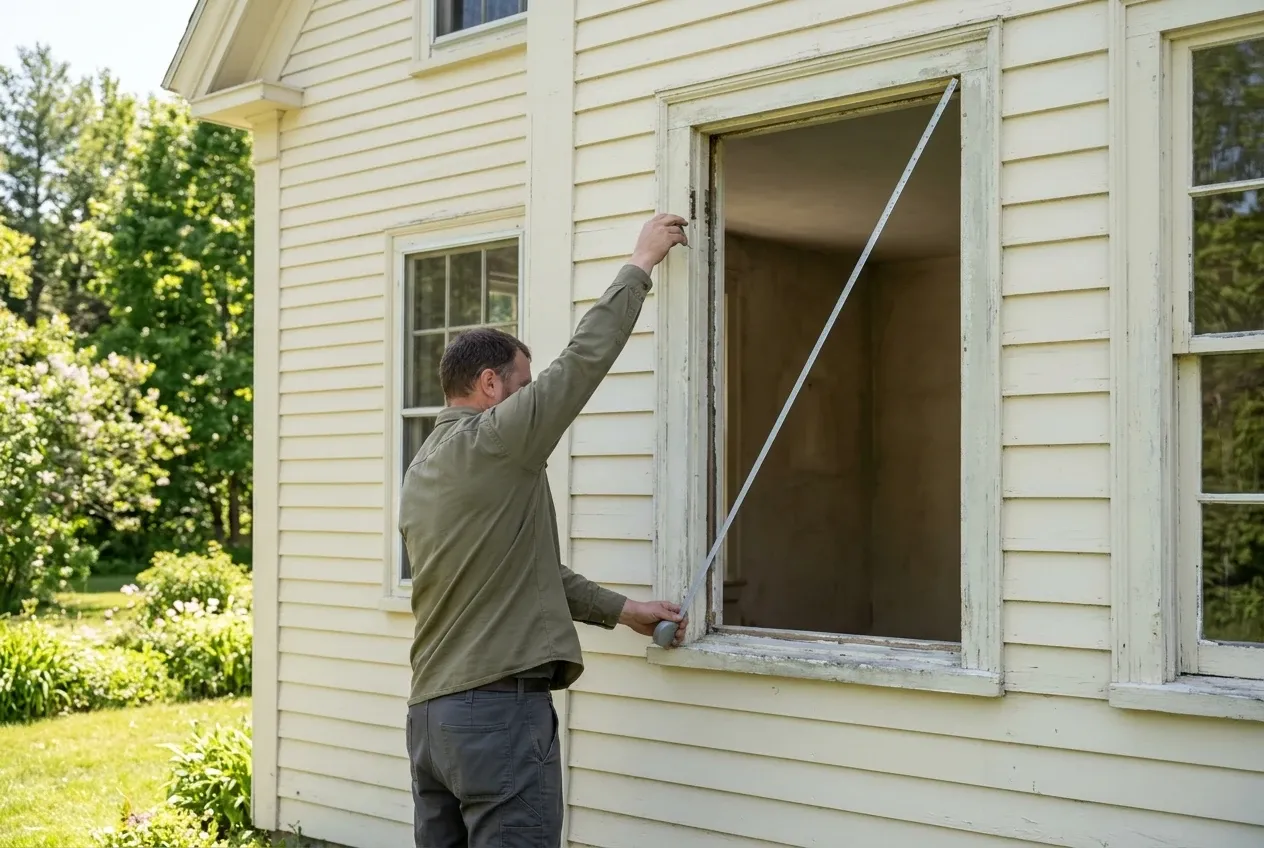
Vinyl window replacement: A man measures an empty window opening on a cream-colored house with six-over-six double-hung windows and white trim during a sunny summer day

Who Chooses Vinyl, and Where and When Does It Go In?

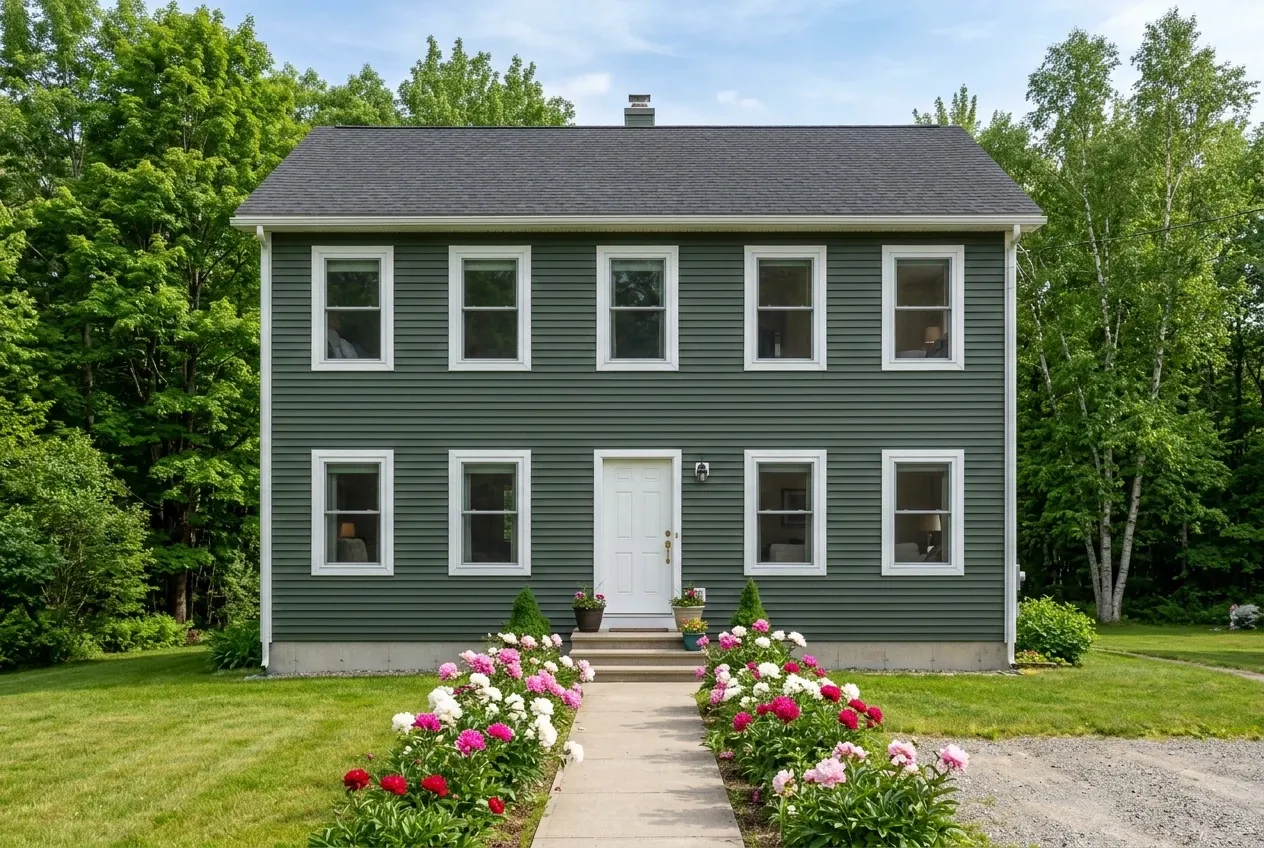
Vinyl window replacement: green two-story house with white trim, nine one-over-one windows, and a white door, set in summer with a walkway lined with pink flowers

Who is a vinyl window a good fit for?

A vinyl window is a good fit for an owner done scraping and painting sash who lives with windows that are drafty, painted shut or fogged up between the panes (fog in that spot tells you the insulated glass has lost its seal).

Where in a house does code shape a new vinyl window?

Code shapes a new vinyl window most in bedrooms, bathrooms and stairways. A bedroom unit meets the egress rule or its exemption, and the 2021 residential code Maine adopted calls for safety glass near tubs and stairs, within 24 inches of a door and in a large low pane beside a walkway.

When in the year can new vinyl windows be set?

New vinyl windows can be set most of the year in the Kennebec Valley, since every opening is closed up before work starts on another and no room sits open to the cold. On a lake camp that shuts for winter, we finish and walk through before you close it up.

How Much Should Vinyl Window Replacement Cost?

Vinyl window replacement should cost about $5,000 to $15,000 when you change out one to five windows, about $28,000 to $65,000 to do the whole house at 15 to 25 windows, and $12,000 to $30,000 for the mid-size order of six to ten in between. Each band averages many quotes across all three frame materials, with vinyl at the low end, so plan inside it rather than read it as your quote.

How Much Should Vinyl Window Replacement Cost?
How many windowsAverage rangeTypical time on site
1 to 5$5,000 to $15,0001 to 3 days
6 to 10$12,000 to $30,0003 to 7 days
15 to 25, the whole house$28,000 to $65,0001 to 3 weeks

Installed averages from many quotes, never the price of one house, covering the old units' removal and disposal, the new windows, sill pans and flashing tape, and trim. Rotted framing gets its own written line, and each brand named here belongs to a maker with no tie to us.

Why don't we quote vinyl windows by the piece?

We don't quote vinyl windows by the piece because window count is only one cost driver, and the same double-hung can be a quick insert in the kitchen and a full-frame job over a soft sill in the bedroom beside it. It is also the reason the bands overlap.

Which parts of a vinyl job cost the most?

The parts of a vinyl job that cost the most are full-frame openings first, then casements, odd shapes and egress units, which all run above plain double-hungs. After those come rot at the sills and headers, often left by ice dams, and new interior trim on old plaster walls.

Should you pick vinyl, fiberglass or wood-clad?

You should pick vinyl when cost and upkeep lead, fiberglass when an opening is wide or you may want to paint the frame (Simonton voids its warranty on painted vinyl), and wood-clad when the face of an old house depends on its windows. Cost rises broadly in that order.

What Happens After You Ask About Vinyl Windows?

After you ask about vinyl windows, we come to the house to measure and probe every opening, then write a price that marks each one insert or full-frame. The visit and that written price cost you nothing.