Skilled Wood Window Replacement | Augusta Window Replacement

Wood window replacement on an older Kennebec Valley house begins with an honest call on each old sash (the part that slides up and down), because some are worth keeping and some are past saving. Our work is replacement, not restoration, so a sound sash gets our advice to keep it, and a failed one gets a wood-clad window that copies its pane pattern.

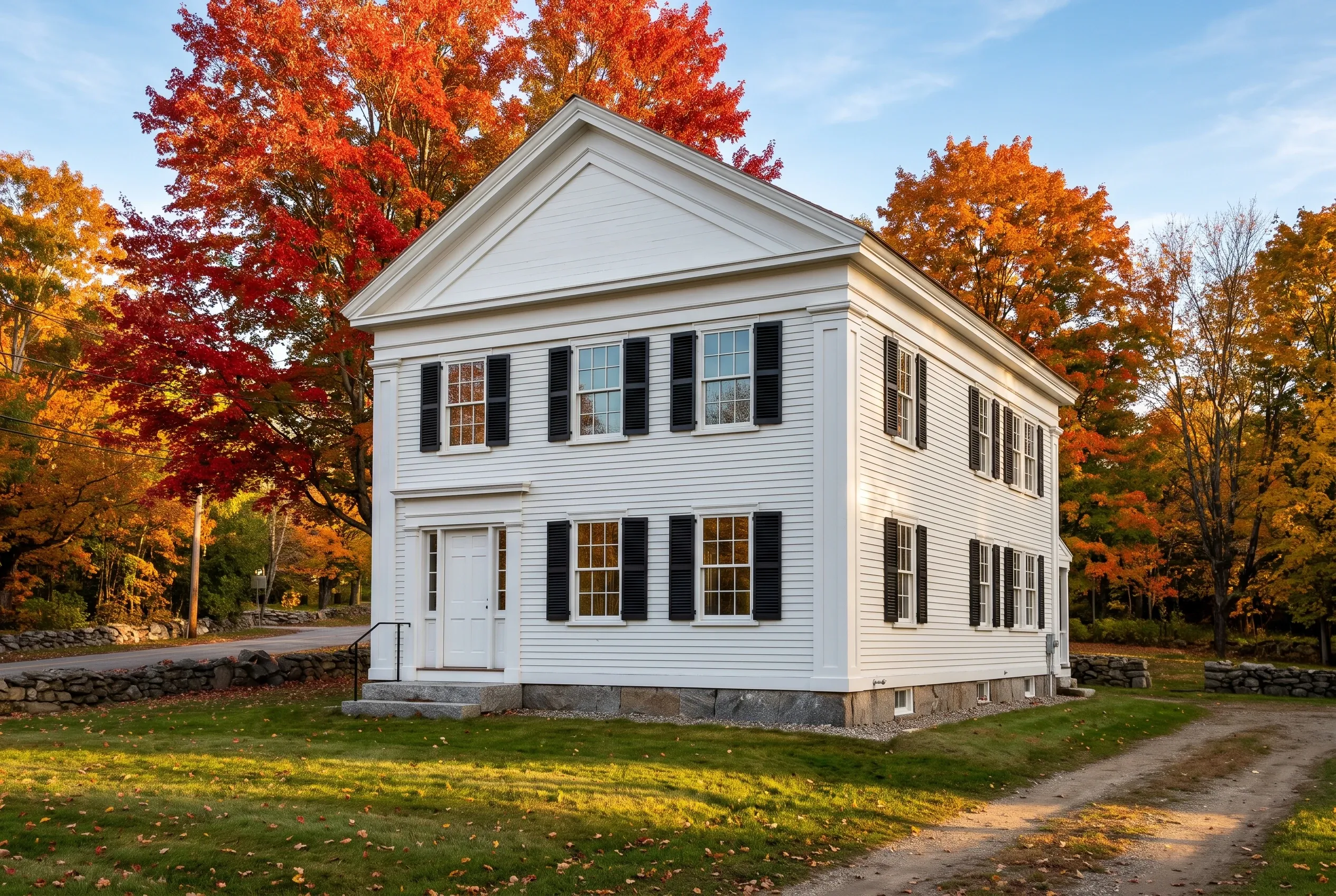
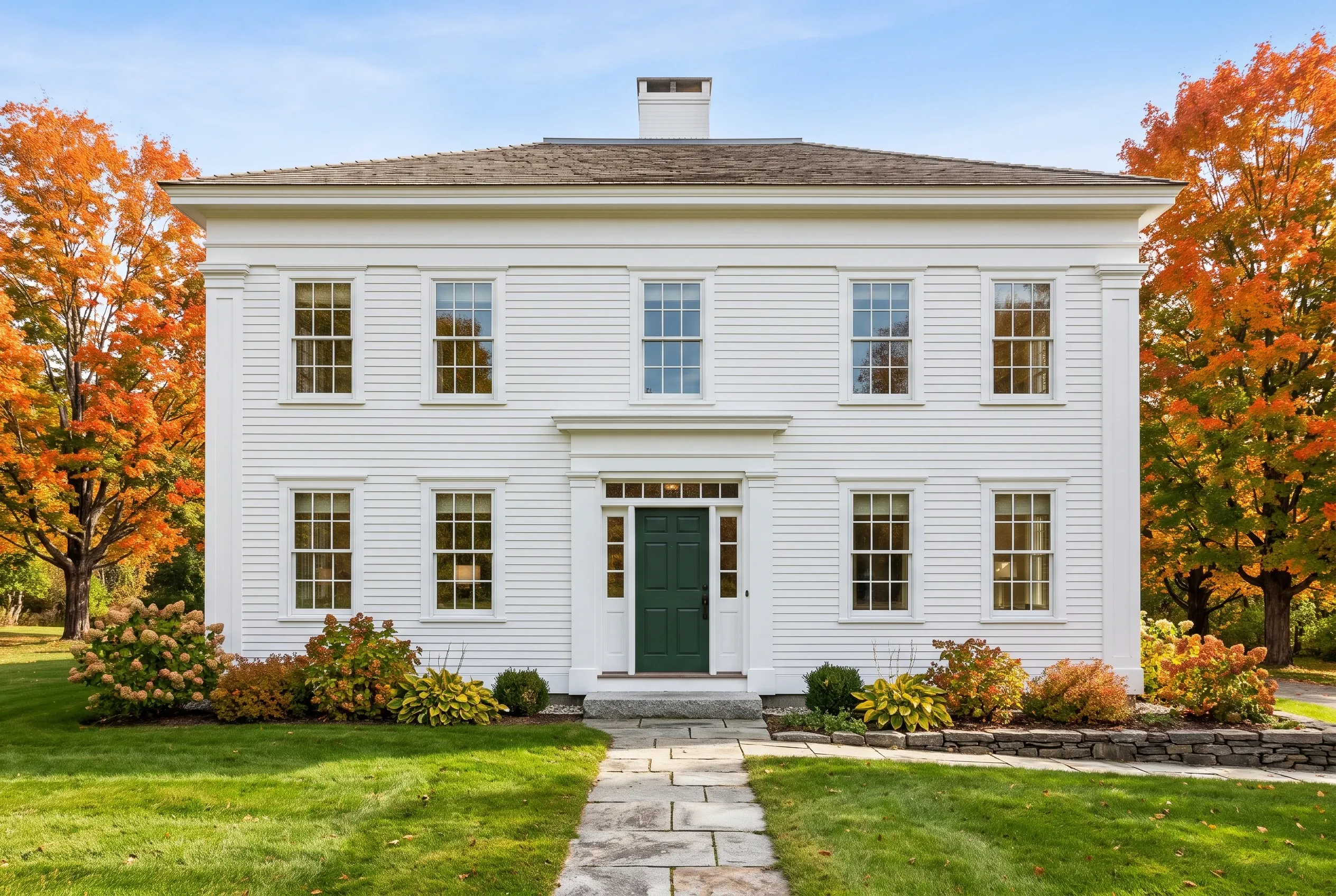
Wood window replacement: white house with six-over-six windows, black shutters, and a white door with sidelights, set against red and orange autumn trees in fall
  • A keep-or-replace call on each old sash
  • Pane pattern copied from the house
  • Full-frame with a sill pan where sills are soft

This page is about wood window replacement on older Kennebec Valley houses: judging which old sash are sound enough to keep, and fitting wood-clad windows, wood inside with a weather skin outside, where a sash has to go.

It is meant for owners of Greek Revival, Federal and Italianate houses and old farmhouses who want the look kept. Augusta Window Replacement replaces rather than restores, so it says plainly when a sash should stay and copies the old pane pattern when one should not.

Keep this range in mind: across many quotes, one to five windows average $5,000 to $15,000 and a full house of 15 to 25 averages $28,000 to $65,000, with wood-clad broadly the costliest of the three frame materials.

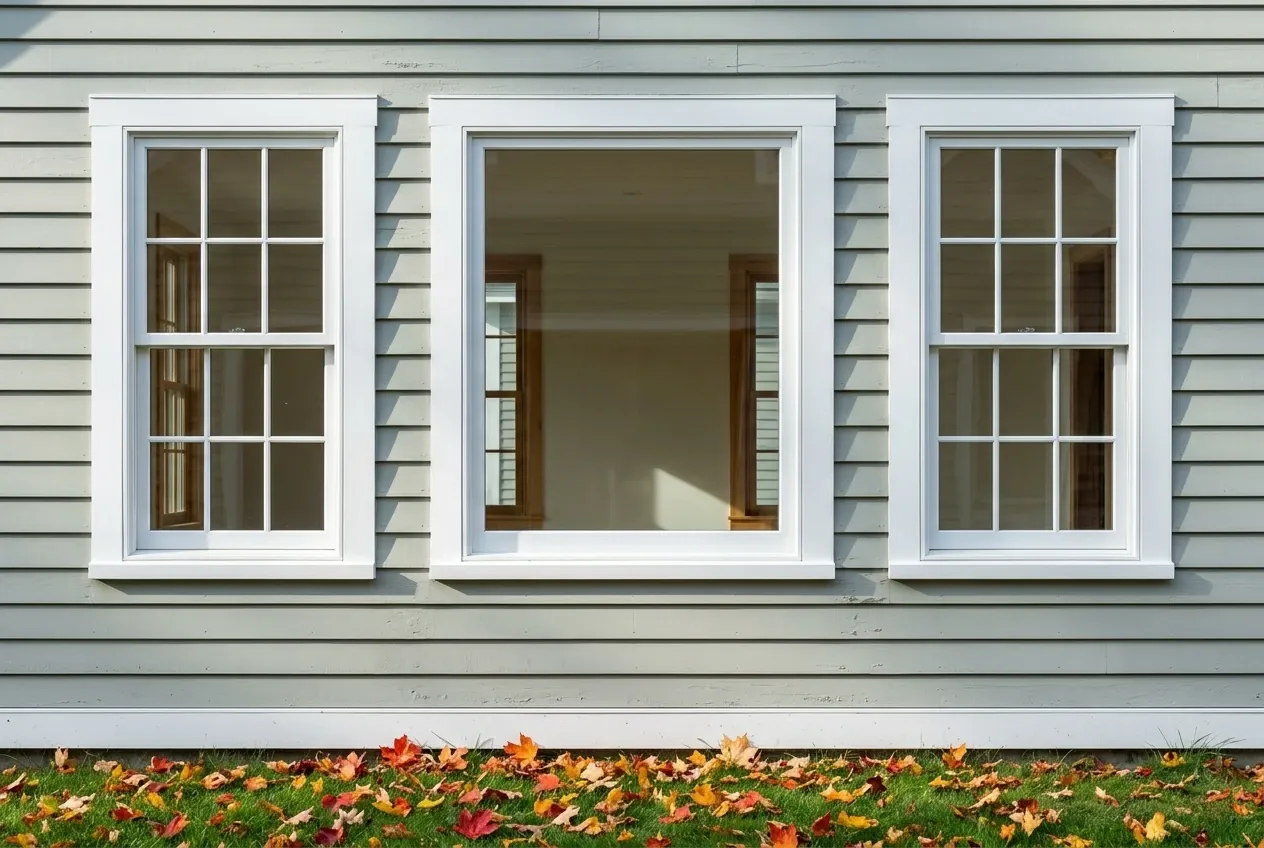
Wood window replacement: light green siding and white trim around two six-over-six windows and a picture window above fallen autumn leaves on green grass
  • Keep-or-replace call per window
  • Old pane pattern copied
  • Old sash and frames hauled off

Why Do Old Wood Windows Fail at the Bottom First?

Old wood windows fail at the bottom first because the sill (the lowest part of the frame, where water pools) and the sash's bottom rail catch the water that runs down the glass, and ice dams soak them again every Kennebec Valley winter. So every wood window price we write starts at the sill, the bottom rail and the header.

  • An awl test at every sill, rail and header
  • Six-over-six or two-over-two copied from the old sash
  • Full-frame and a sill pan wherever a sill is soft

What Does Wood Window Work Involve on an Old House?

Wood window work on an old house comes down to three calls: which sash stay, what replaces the rest, and how the inside is finished and kept safe.

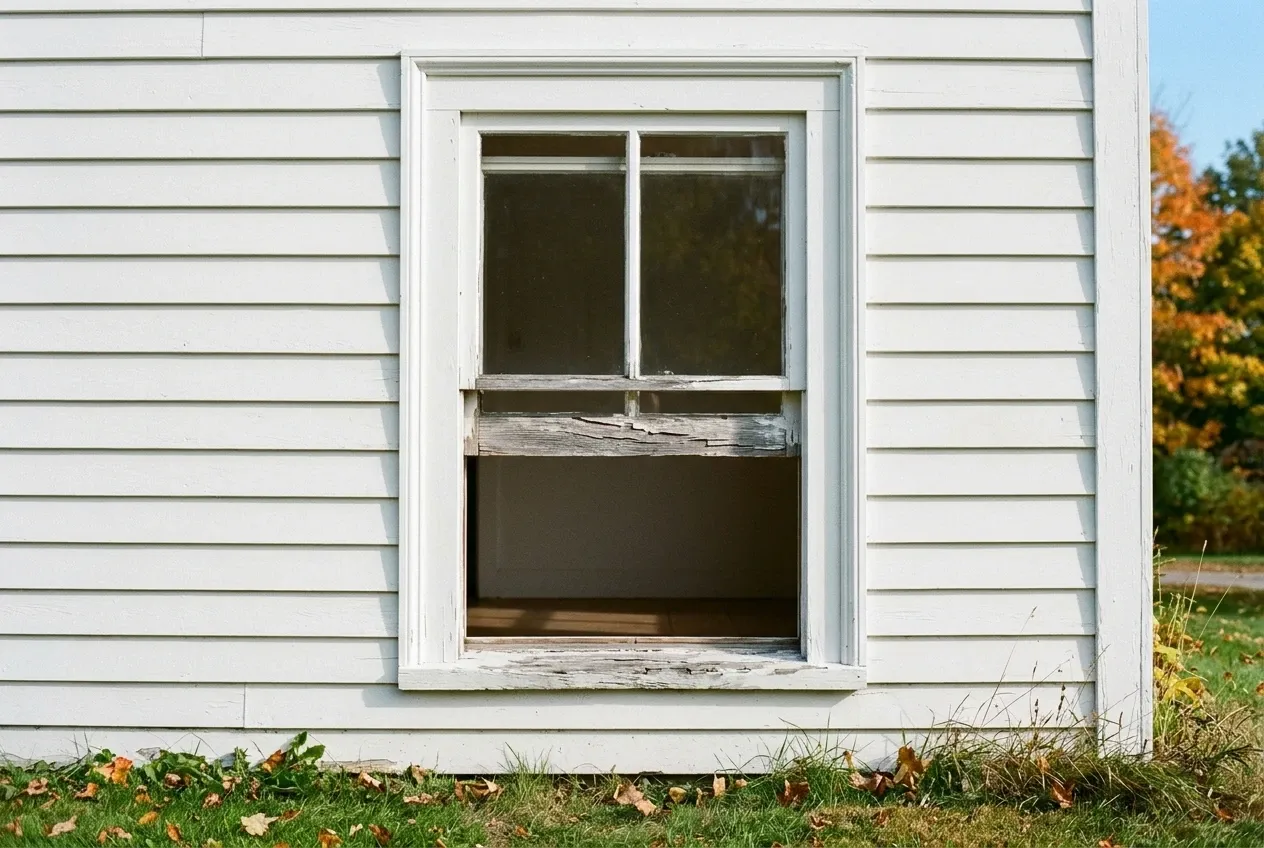
Wood window replacement: white siding house with a two-over-two double-hung window; the lower sash is missing, showing an empty opening and weathered wood sill in autumn

When Is an Old Wood Sash Worth Keeping?

An old wood sash is worth keeping when the wood is sound and only a few parts need work. In Preservation Brief 9, the National Park Service warns that failed paint is no proof the wood is beyond repair, names an ice pick or awl as the test for soundness, and finds repair cost effective when few parts per window, or few windows, need it.

Brief 9 also counts exterior storm windows as an efficient, reversible way to keep an original sash, and a Department of Energy profile of Building Science Corporation's guides reserves them for windows free of rot, broken parts and leaks into the wall.

We do not restore sash, so when yours pass that test we tell you to have them repaired. When the wood crumbles under the awl, a new wood-clad window is the better buy.
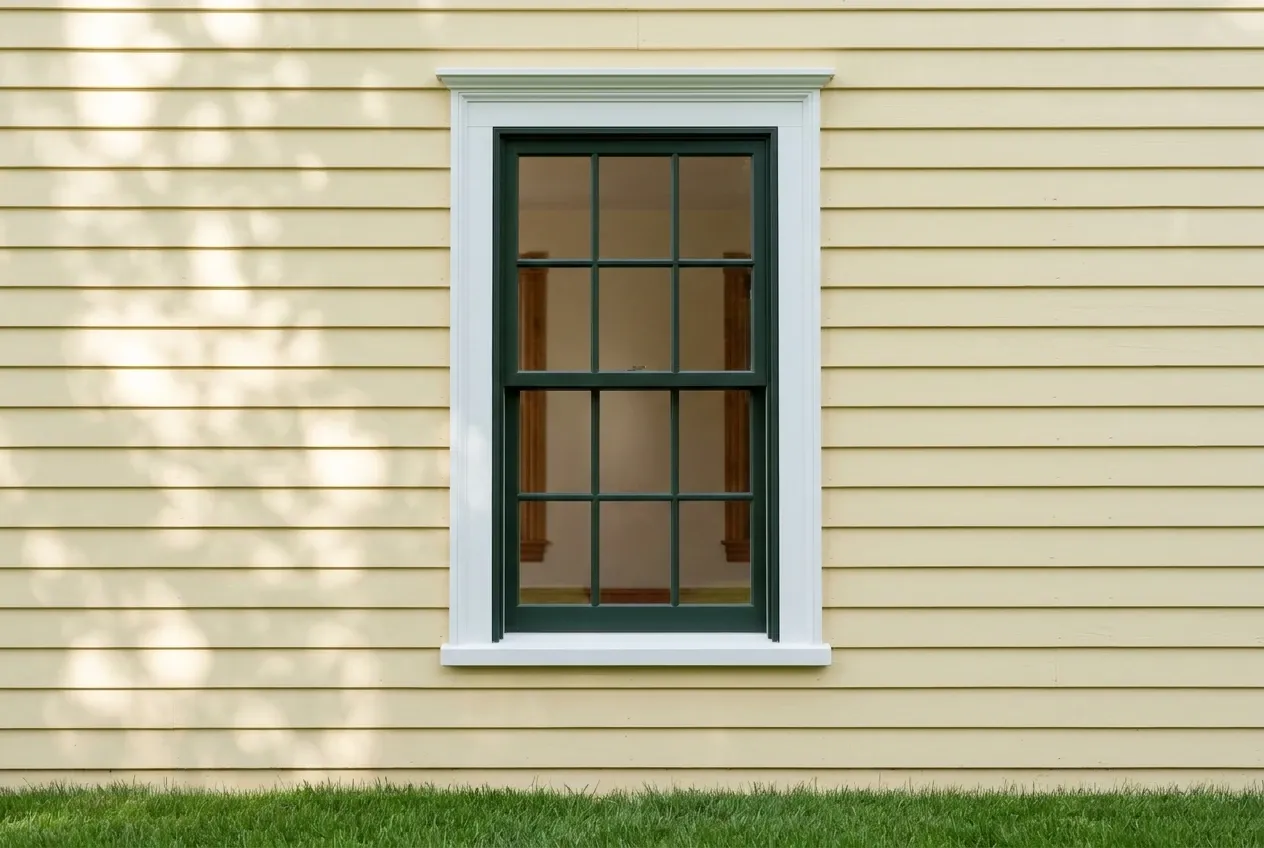
Wood window replacement: yellow house with one dark green six-over-six window and white trim, featuring lap siding above green grass in dappled summer sunlight

How a Wood-Clad Window Keeps an Old House's Look

A wood-clad window is wood on the inside with a weather skin outside. Andersen calls the Perma-Shield skin on its 400 Series a high-grade vinyl formed or extruded around the wood, Marvin names extruded aluminum as the most common exterior on its Ultimate windows, and Pella sells its Lifestyle Series as aluminum-clad wood.

Brief 9 says the choice of a replacement should start with the old windows: their openings, proportions, pane layout, muntin profiles (the shape of the bars between panes) and type of wood. On a Greek Revival or Federal front with six-over-six sash, we copy that layout in simulated divided lites, with muntin bars fixed to the outside and inside of the glass, never in snap-in grilles.

Being on the National Register does not, by itself, limit what a private owner may do, according to the National Park Service, but a local district can. Augusta's Land Use Ordinance requires a historic preservation certificate for a change in a contributing building's exterior appearance seen from the street in its four local districts, and it exempts repairs that keep the design and materials, storm windows and work not visible from the street.

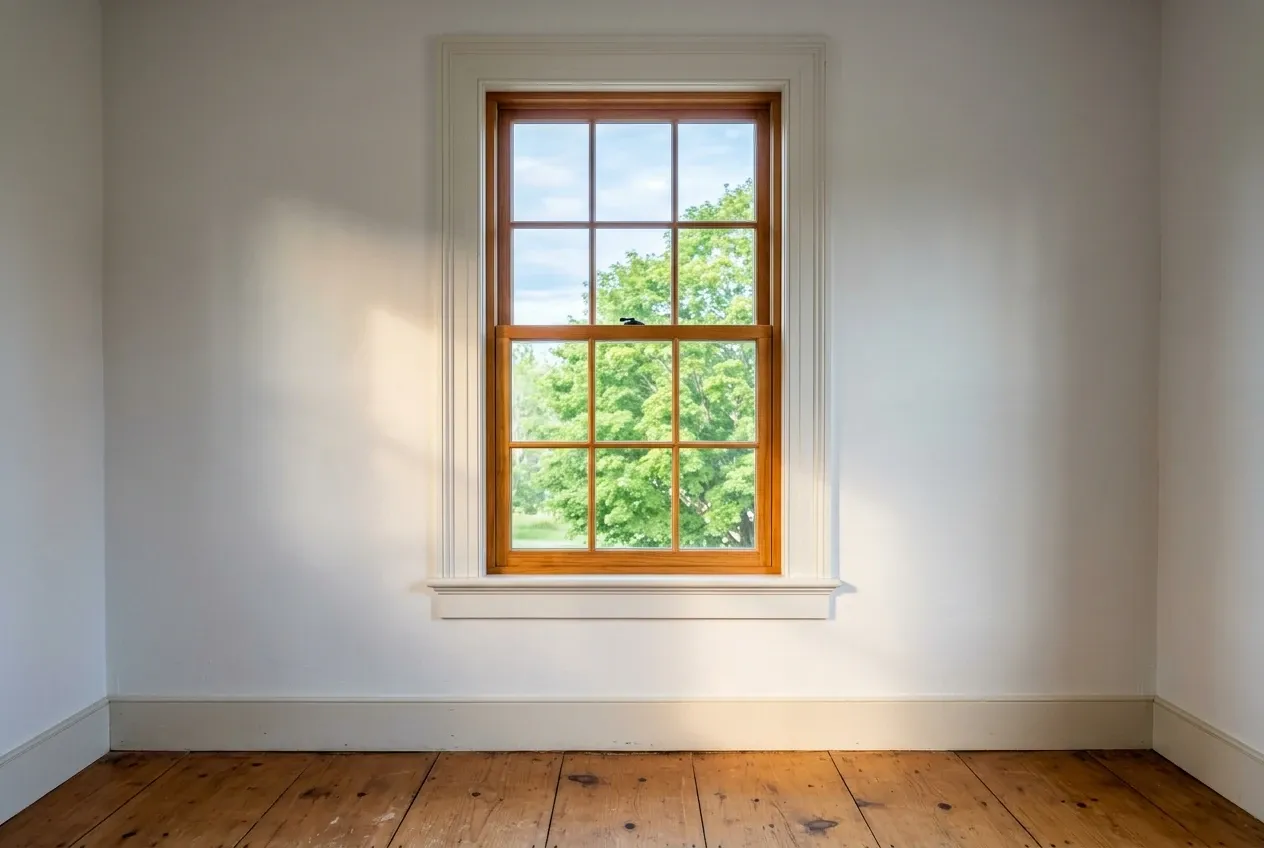
Wood window replacement: A six-over-six double-hung wood window with white trim on a white wall above wood floors, showing a green leafy tree outside during summer

Inside a Wood Window: Finish, Plaster and Lead

The wood inside a clad window has to be stained or painted: Andersen's insert guide warns that unfinished wood will discolor and can bow or split, and Marvin's warranty leaves out exposed wood that was never treated and sealed. Plan that finish for the weeks after the install.

On a plastered house, an insert leaves the old interior casing in place, as Andersen notes, while a full-frame unit takes the casing off and leaves a plaster edge to patch and trim. That trim is skilled work, and the line most window budgets forget.

On a house built before 1978, EPA's lead rule covers window replacement whatever its size, and in Maine EPA runs the rule itself. Ask the firm you hire to show its EPA certification, and expect EPA's Renovate Right pamphlet ahead of the first day of work.

What Wood Window Services Do We Offer?

Everything below is replacement work, from the condition check to the last trim piece.

  • Each sash, sill and frame judged keep or replace
  • Wood-clad inserts in sound frames, full-frame in soft ones
  • The old muntin layout and casing carried over

Under the existing-building code Maine adopted, IEBC 505.1, a replacement window is held to the rules for a new one, so in climate zone 6A, where Kennebec and Lincoln counties sit, new windows in an 1840s house still have to rate U-0.30 or better (a lower U-factor keeps more heat in). Before the job, we ask the town's code office what it requires and file for the permit wherever one is needed.

How to Go From Old Sash to New Wood-Clad Windows

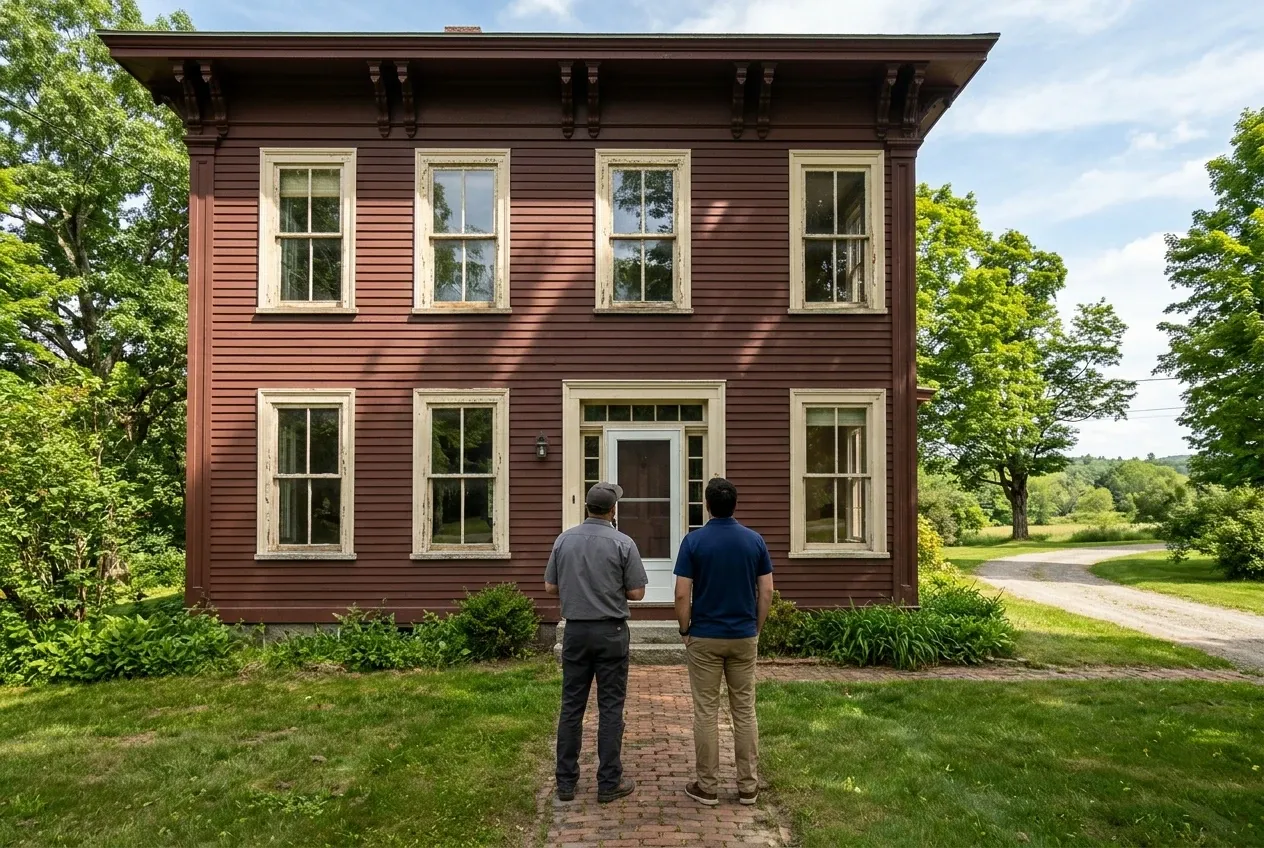
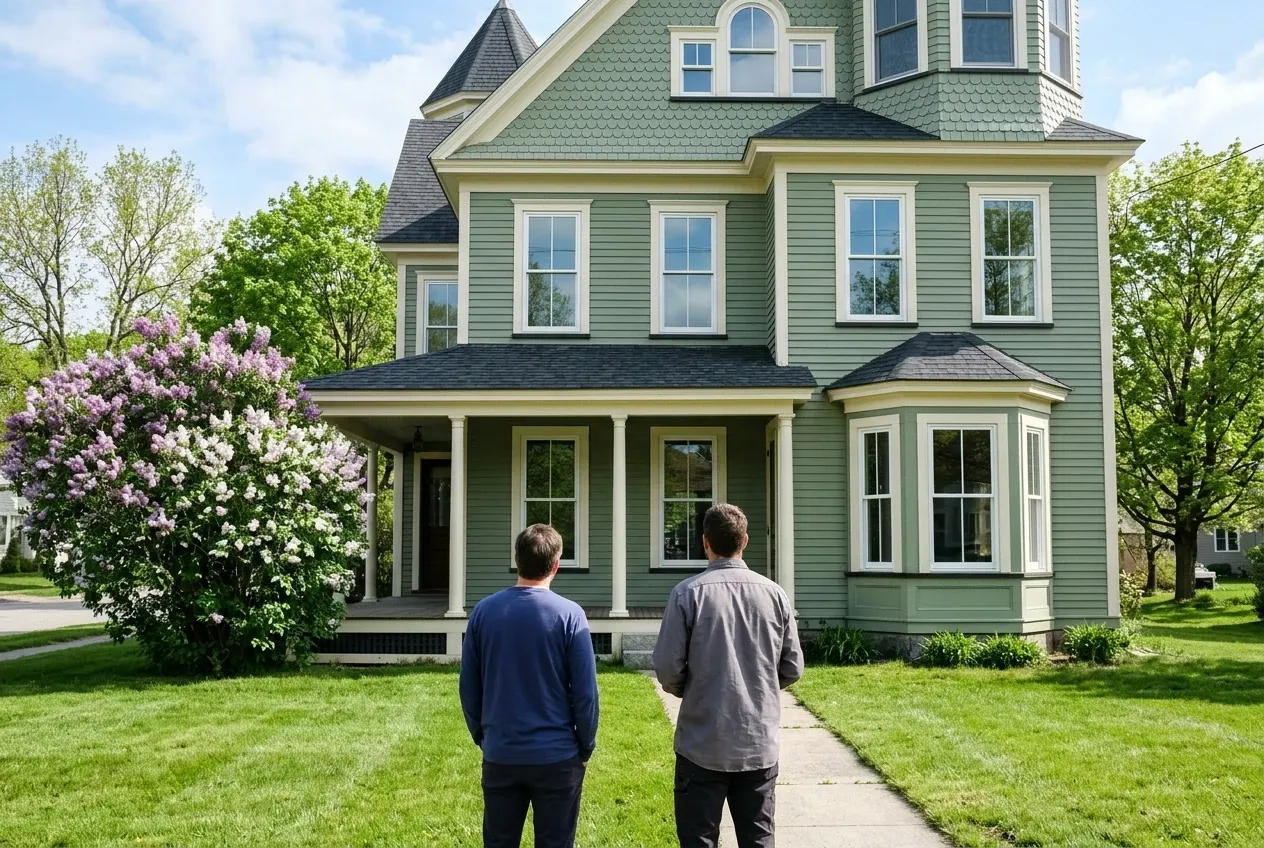
  1. Wood window replacement first visit: two men stand on a brick path looking at a brown house with seven two-over-two windows, cream trim, and a white door with sidelights in summer

    Step 1: A visit that looks at every window.

    We measure each opening, press an awl into every sill and bottom rail, check each frame for square, and note each sash's pane pattern and the casing you want kept.

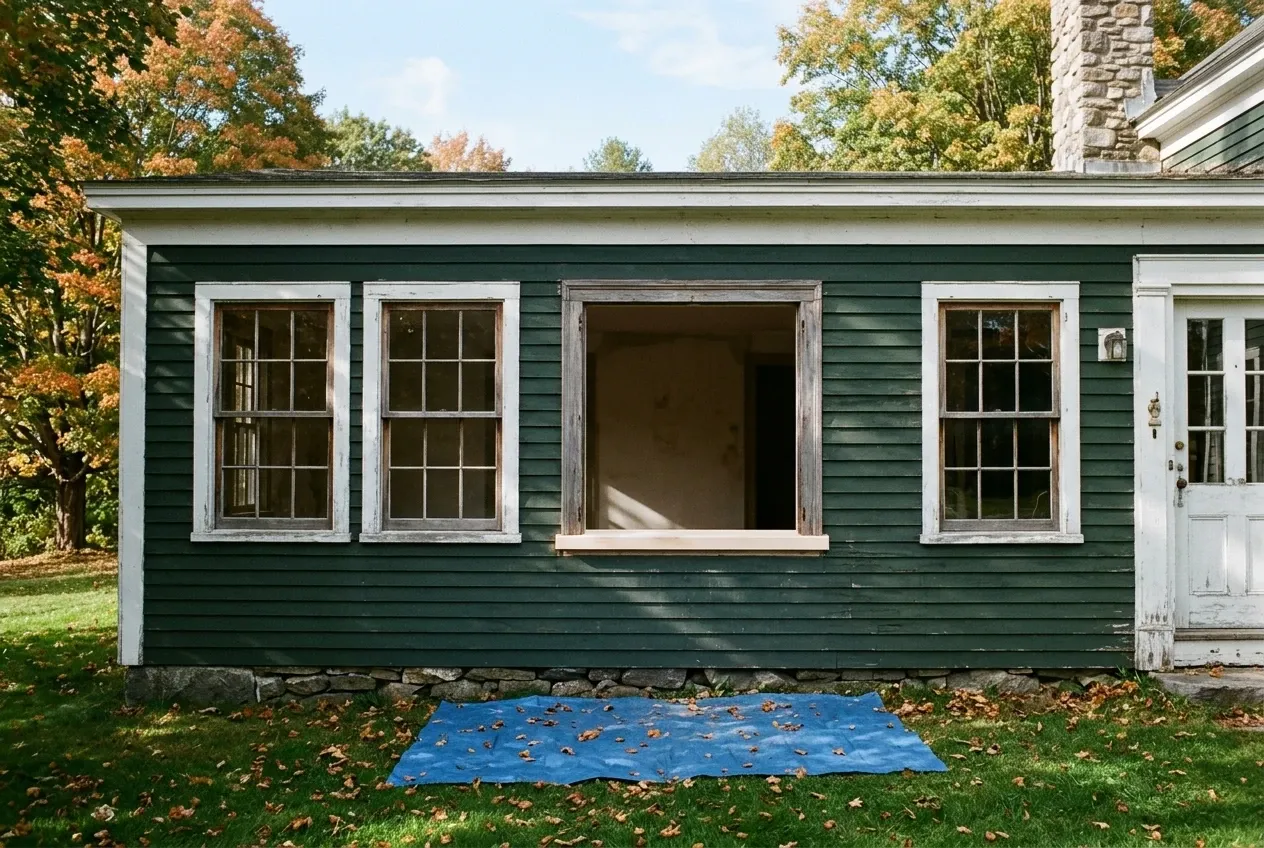
  2. Wood window replacement in progress: green house with white trim and three six-over-six double-hung windows, one empty window frame being renovated, and a white door with sidelights in autumn

    Step 2: A price on paper before work starts.

    Each window is marked keep, insert or full-frame on the written price, and for any job over $3,000 Maine's 10 MRSA ยง1487 requires a written contract both parties sign and keeps the up-front payment at a third of the price or below. Any rot behind the casing is shown to you first, and its repair waits for a written change order you sign.

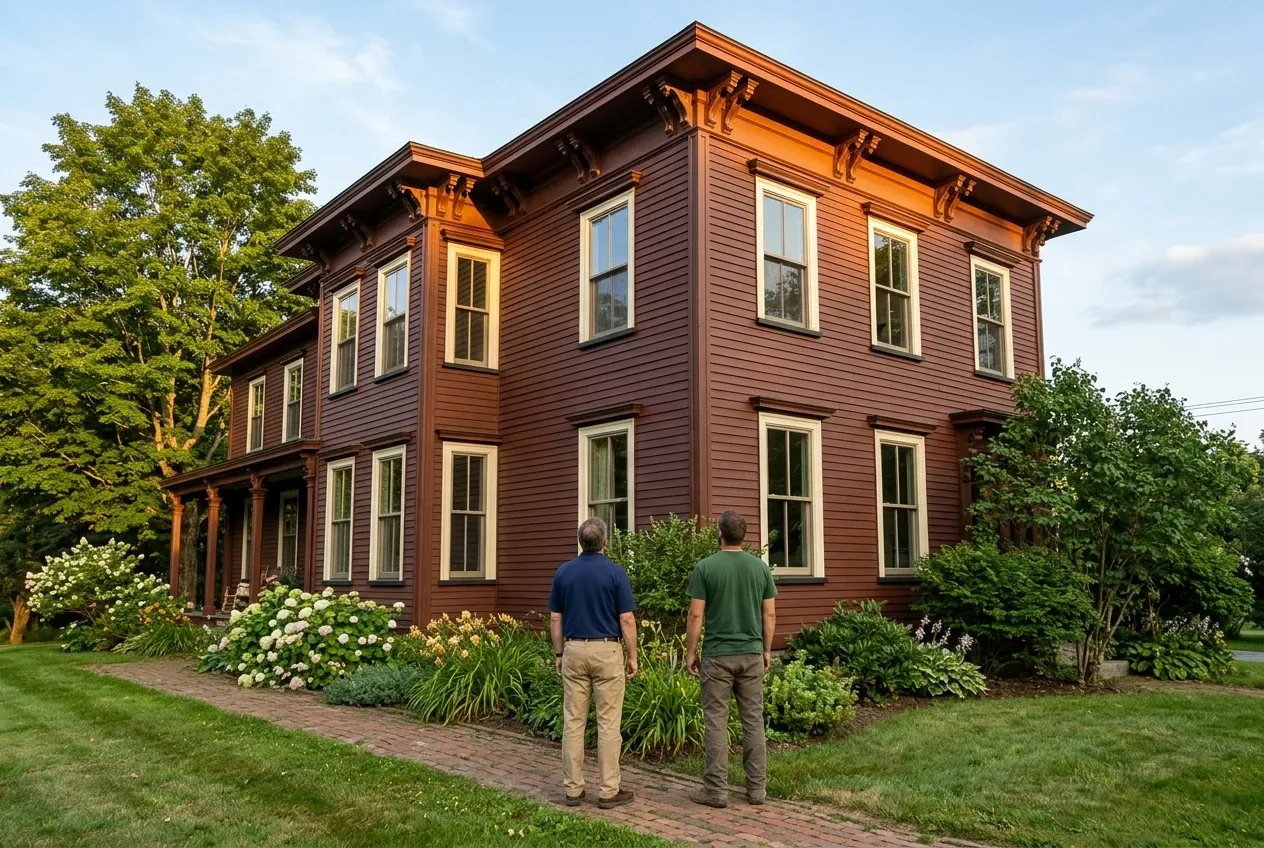
  3. Wood window replacement final walkthrough: two men stand on a brick path looking at a brown house with cream trim and thirteen two-over-two windows in a summer garden

    Step 3: A single opening at a time, ending with a walkthrough.

    Each old window comes out and its opening is closed before the next is touched, and every full-frame opening gets a sill pan, with flashing tape shingled up the sides and over the head into the house wrap. We haul the old sash and frames away, then walk every room with you.

When Is Wood Window Replacement the Right Call?

Wood window replacement is the right call when old sash have rotted past a few parts, or when the face of the house depends on wood windows: a Greek Revival, Federal or Italianate front, or a farmhouse still showing its six-over-six pattern. Wood-clad keeps that face while the cladding takes the weather.

It is the wrong call when an awl finds sound wood and the only complaint is a draft, since repair, new weatherstripping and an exterior storm keep the original for less, as Brief 9 says. It is also hard to justify on a plain ranch or a newer colonial, where vinyl window replacement does the same work at a lower price.

Between those, mix the two: wood-clad on the street face and in the rooms you live in, and a lower-cost material at the back.

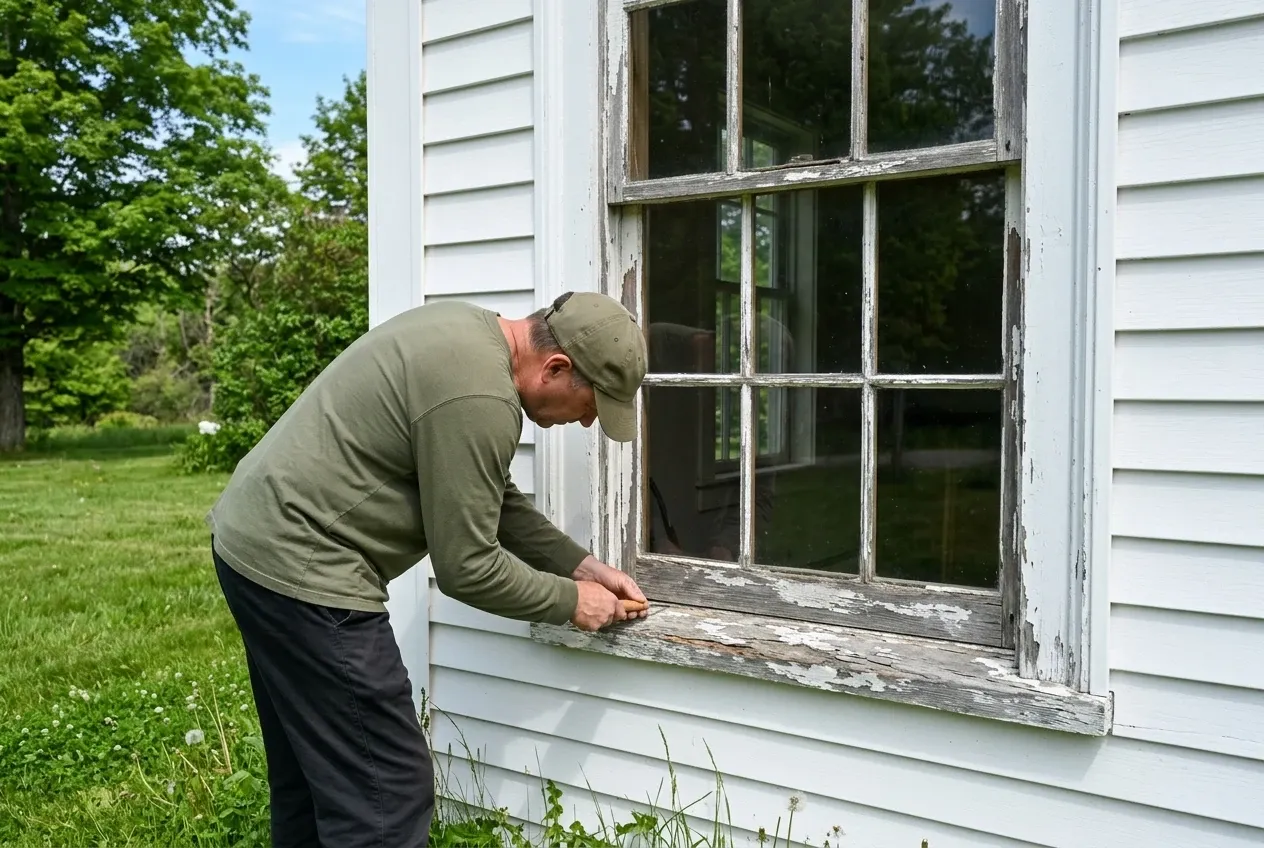
Wood window replacement: one man in a green shirt scrapes peeling paint from a six-over-six window sill on a white house with white siding in a green yard

Who Picks Wood, Where It Goes First, and When?

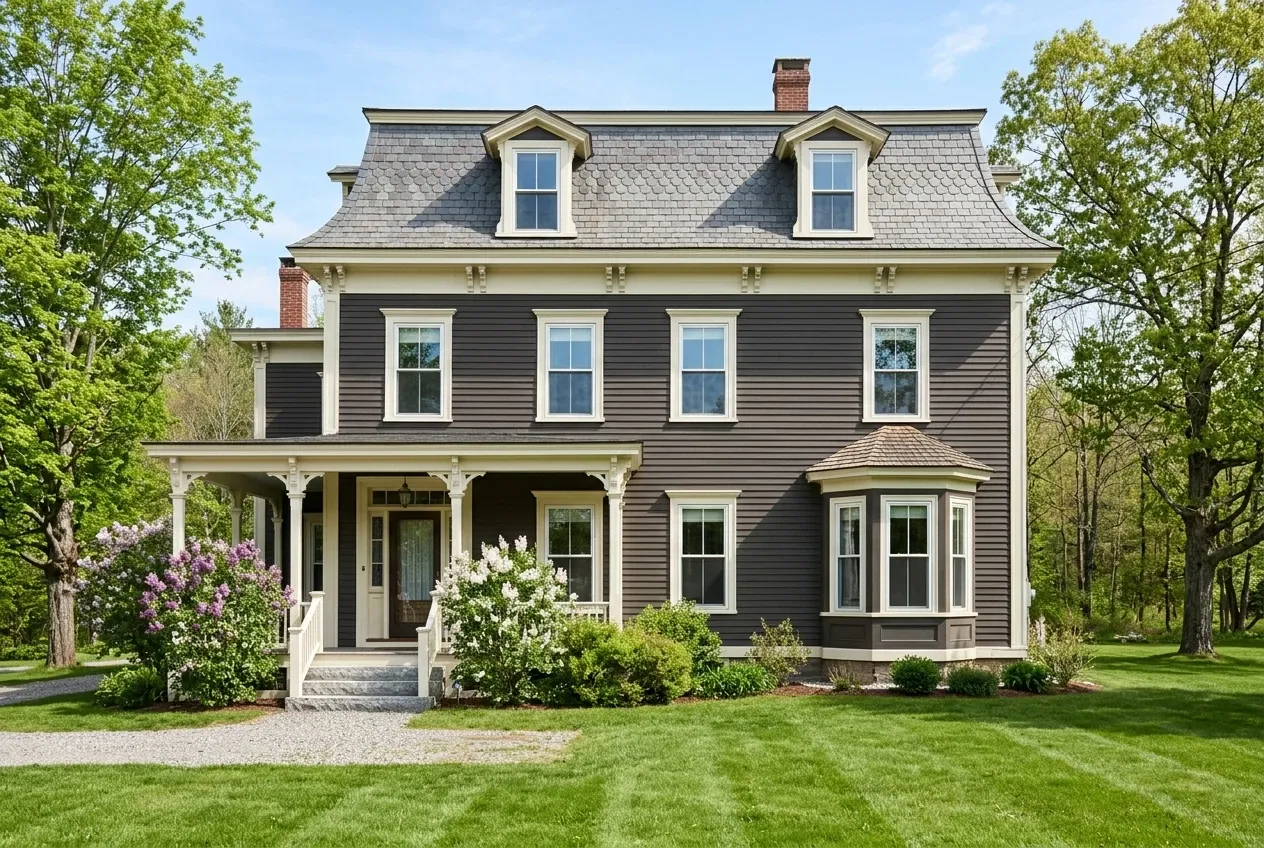
Wood window replacement: two-story dark brown house with cream trim, featuring six-over-six and two-over-two double-hung windows, a front porch, and lush green spring trees

Whose old wood windows are past keeping?

Old wood windows are past keeping when the sill and bottom rail give under an awl, when rain has found its way into the wall below, or when a newer double-pane wood unit has fogged up between the panes, which means its insulated glass seal has failed. A sash that won't stay up usually has a broken cord, which a restorer can fix, so that alone is no reason to replace it.

Where do new wood windows make the most difference?

New wood windows make the most difference on the street face, where the pane pattern sets the look of the house, and on walls under eaves that build ice dams, where sills and headers soak every winter.

When should wood-clad windows be ordered?

Wood-clad windows should be ordered after the visit and any town review, since units sized to an old opening and its pane pattern are built to order. In Hallowell's local historic district, work that changes an exterior architectural feature needs the Planning Board's certificate of appropriateness before the building permit.

How Much Should You Budget for Wood Window Replacement?

Wood window replacement for one to five openings averages $5,000 to $15,000, a mid-size job of six to ten runs $12,000 to $30,000, and $28,000 to $65,000 is the average once the order covers the whole house, 15 to 25 windows. Wood-clad is broadly the costliest frame material, and these figures blend many quotes for all three, so they mark where a budget starts, not your price.

How Much Should You Budget for Wood Window Replacement?
How many windowsAverage rangeTypical time on site
1 to 5$5,000 to $15,0001 to 3 days
6 to 10$12,000 to $30,0003 to 7 days
15 to 25, the whole house$28,000 to $65,0001 to 3 weeks

Installed averages across many capital-area quotes, not a quote: removal of the old windows, new units, sill pans and flashing, trim and haul-away. Rotted framing is priced separately in writing, and Andersen, Marvin and Pella are their makers' names, with no connection to us.

Why won't we put one price on a wood window?

We won't put one price on a wood window because no two old openings need the same work: a front window over a soft sill goes full-frame with new interior trim, while a sound frame at the back may take an insert.

What makes one wood window job cost more than another?

One wood window job costs more than another because of how many openings go full-frame, custom sizes and divided lites, rot at the sills, interior trim on old plaster, and the lead-safe setup EPA requires on a pre-1978 house. A sound sash you keep comes off the price.

Is wood-clad worth paying more for than vinyl?

Wood-clad is worth paying more for than vinyl on a house whose look depends on its windows, and in rooms where you want to see wood. On a plain ranch or the back of an ell, vinyl does the job for less.

Want a Straight Answer on Your Old Wood Windows?

A straight answer on your old wood windows starts with a free estimate: we test each sash and sill, tell you which windows to keep, and price the ones that should go in writing. The visit costs nothing, and neither does the advice to keep a sound window.